Why Korea Became the Glow Up Capital of the World
Korea is having a moment. Although \u201cmoment\u201d undersells it considerably.
K-pop. K-drama. K-food. Last year a Netflix film about a girl group who moonlight as demon hunters became the most-watched title in Netflix\u2019s entire history, with 236 million views. In a survey of 27,400 people across 30 countries, nearly 70 percent said they were interested in Korean cultural content. Korean food ranked second as the thing people most associate with the country. Beauty came fourth, and it is climbing.
Which brings me to K-beauty. And to a conversation I had with my husband a few weeks ago.
I said, out loud, in my own kitchen: \u201cI feel like a used up old corn husk.\u201d
(No offence intended to corn husks. They are doing their best.)
Here is the thing. I am not desperately unhappy. My life is good. My people are healthy. But there comes a point where you catch yourself in a shop window and think, when did I get so tired? Not sad. Not vain. Just a small, private noticing that your glow has faded somewhere along the way, and you cannot pinpoint the day it happened.
Which is roughly the point at which the algorithm found me.
I have become mildly obsessed with K-beauty videos. I have watched a 56-year-old woman with better skin than most 30-year-olds. I have watched ordinary faces go into Seoul clinics and something close to angelic come back out. I have watched enzyme dirt baths, and mugwort steams for\u2026 well. I will not say. And I seriously cannot stop.
What keeps pulling me back is not the results. It is the strangeness of the combination.
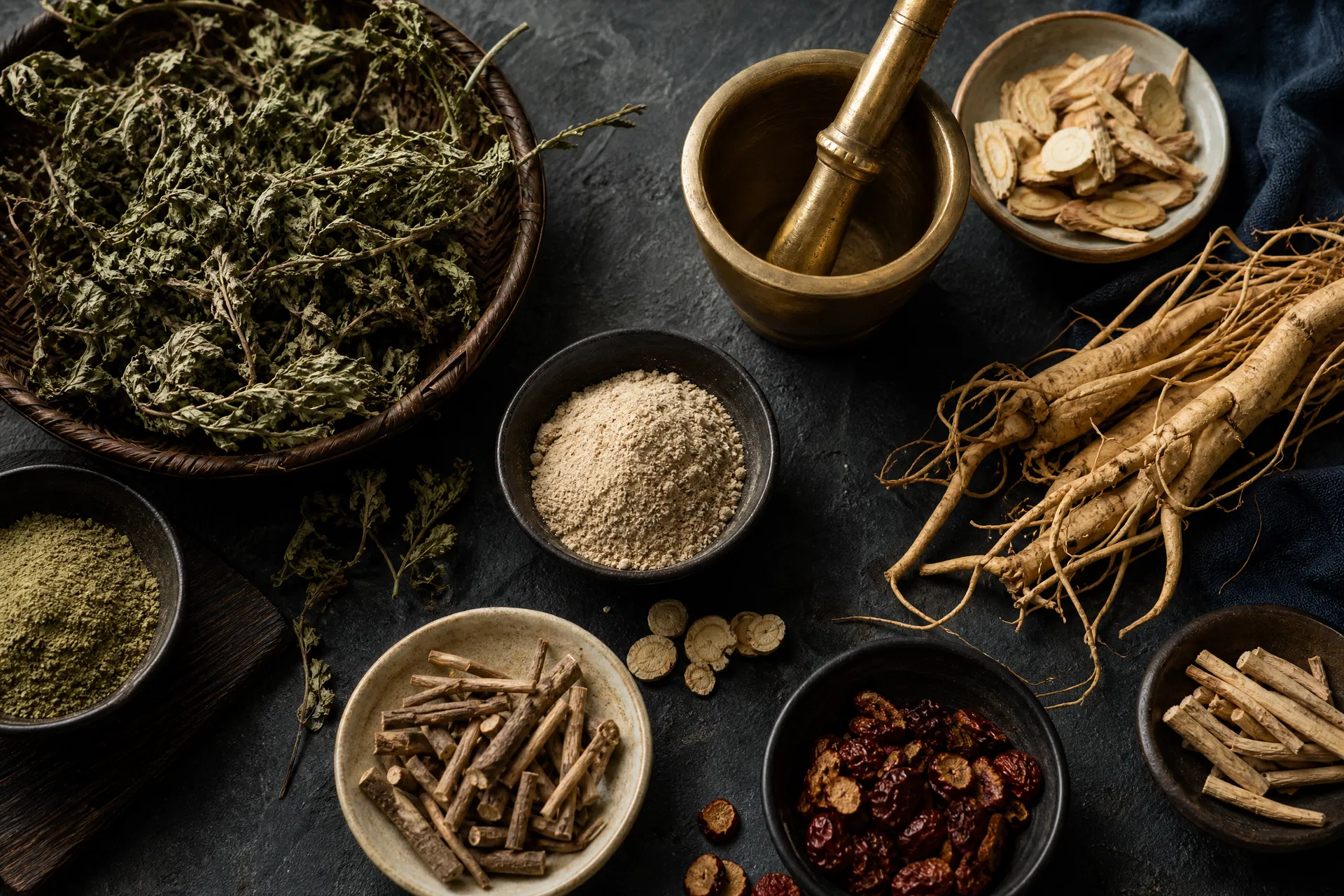
Mugwort has been used in Korean herbal medicine, hanbang, for centuries. Korean grandmothers have been steaming with it, drinking it and cooking with it for generations. And it is now sitting in the same city, sometimes the same building, as some of the most advanced aesthetic technology on the planet. A thousand-year-old herb and a laser, on the same appointment card.
That is what Korea has actually built, and I think it is why it works. Not a trend. A beauty mecca where the ancient and the cutting edge are not in tension with each other. They are in the same treatment room.
Enter Gatherwell\u2019s Seoul Glow Week.
The NumbersA million people already had this idea
In 2024, 1,170,467 foreign patients travelled to South Korea for care. In 2015 that number was 296,889. It has nearly quadrupled in a decade.
Ask most people what they went for and they will say plastic surgery. They would be wrong. Dermatology accounted for 56.6 percent of visits. Plastic surgery was a distant second at 11.4 percent.
Over a million people a year are flying to Seoul, and most of them are going for their skin.
This is not a fringe thing a few brave women do. It is a well-worn path, and it is getting busier. Foreign visitor spending at Korean skin care and massage businesses rose 153.9 percent in a year.
So I went looking at whether the week I wanted to build would actually do anything. Not whether it would be lovely. Whether it would work.
The ScienceThe science behind the week
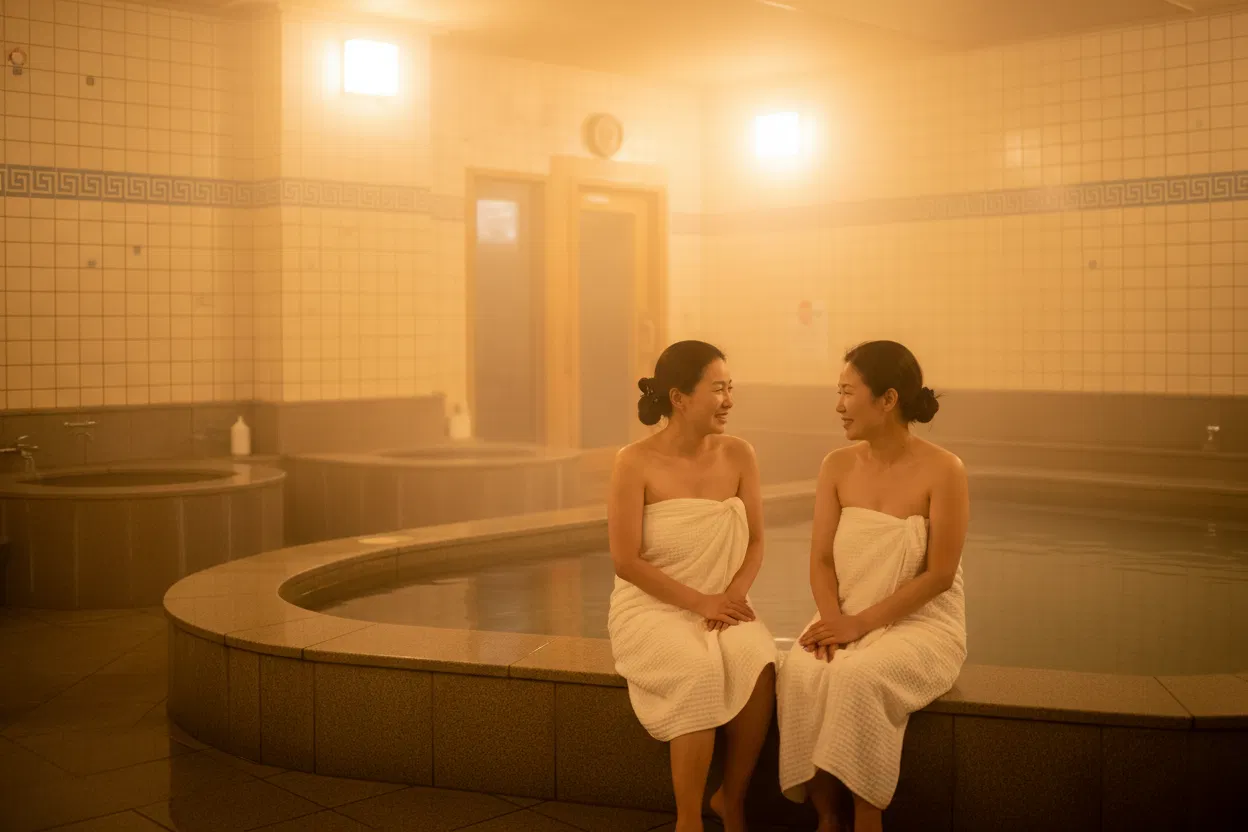
The bathhouse is not an indulgence. It is a health practice.
A study in JAMA Internal Medicine followed 2,315 men for a median of 21 years. Compared with once-a-week sauna users, those who went four to seven times a week had 40 percent lower all-cause mortality and roughly half the risk of fatal cardiovascular disease.
That is a lifelong habit in Finnish men, and no single week will do that for you. I am not going to pretend otherwise.
But it tells you what you are stepping into. In Korea the bathhouse is not a treat, it is infrastructure. It is what a whole country does, routinely, across generations, and the practice turns out to have real physiology behind it. Sitting in that hot room is not being pampered. It is doing something Koreans have understood for centuries and we mostly forgot.
The massage, with the marketing removed
You have read that massage lowers your cortisol. A comprehensive review of the evidence found that effect is \u201cgenerally very small and, in most cases, not statistically distinguishable from zero.\u201d
I am telling you that because I would rather you trusted me.
The same review, in the next breath: massage has \u201cwell-established and statistically larger beneficial effects on anxiety, depression, and pain.\u201d The benefits are real. The popular explanation for them is wrong. A Korean aroma massage will not reset your hormones. It will make you measurably less anxious and less sore, and after the year most women I know have had, that is plenty.
The ProductsWhy the products are held to a higher standard
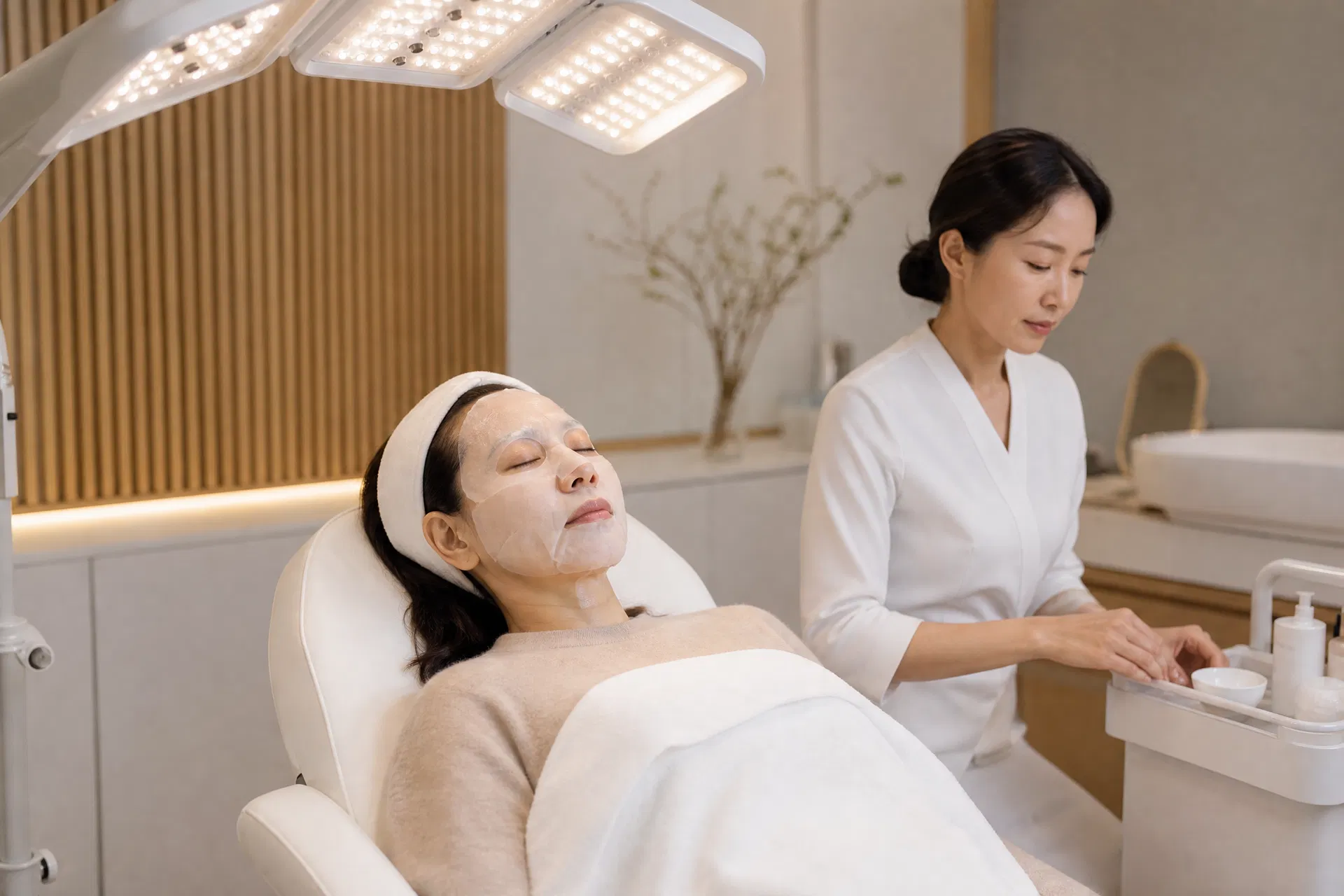
Korea has a legal category called functional cosmetics that does not exist here. If a Korean product claims to improve wrinkles or brighten skin, the maker must submit efficacy data, including human clinical testing, before it can say so. Here, cosmetic claims carry no equivalent requirement to prove anything in advance.
One rule, and everything downstream changes. It is a large part of why Korea now exports more beauty than any country on earth except France.
The ingredients you will meet have real trials behind them. Niacinamide is the most validated ingredient in skincare, shown to reduce fine lines and pigmentation. Centella asiatica, the \u201ccica\u201d in half the tubes in Seoul, has good evidence for healing and aging.
And the honest part: not all of it holds up. The famous ten-step routine was invented for Western audiences in 2014, and no trial shows it beats a good three-step one. Sheet masks are lovely and temporary. The case for Korea does not need the weak parts.
The FoodEven the food is working
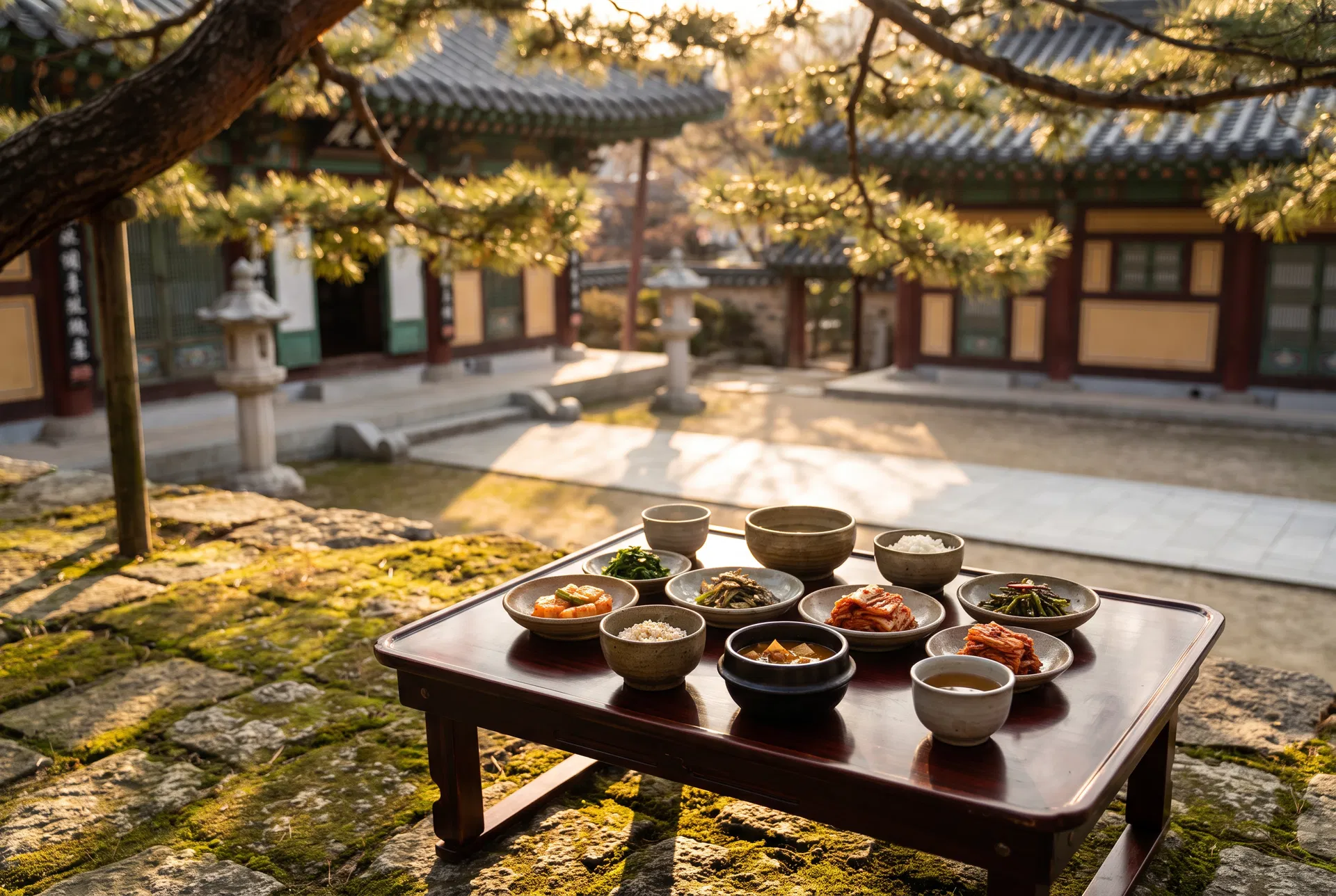
The week includes a Michelin-starred Buddhist temple lunch, and it will be one of the quietest, most beautiful meals of your life. Korean fermented foods, the kimchi and doenjang on every table, are also among the more actively researched areas in gut health. You will eat extraordinarily well, and your gut will have a better week than it does at home.
The EvidenceDoes anyone actually come home renewed?
There is a meta-analysis of 13 studies and 1,428 people on exactly this. Holidays do improve wellbeing. And then, once you are back at work, the benefit fades within about a week.
I nearly left that out. Then I realised it is the most useful thing here, because it is the reason this week is shaped the way it is.
A beach gives you a mood, and moods evaporate. So I built the week around the things that do not.
You come home with results you can see. Skin, hair, nails, a face that has had months of professional attention compressed into seven days. That is still in the mirror in June.
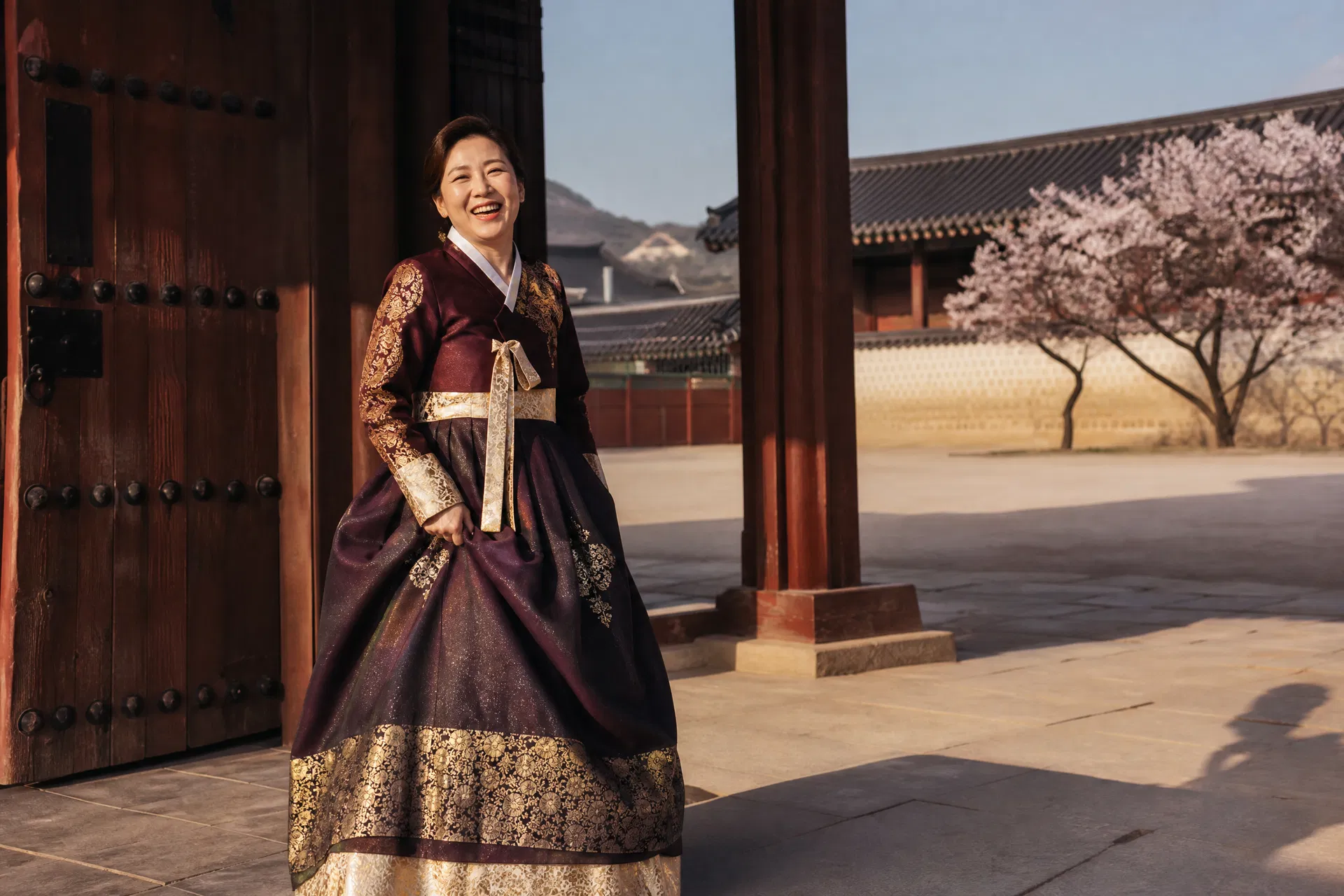
You come home with photographs of yourself. Not behind the camera. In it. Hanbok at the palace, and a proper shoot at the end of the week, because after seven days like this you will want proof. Those outlive the holiday by decades.
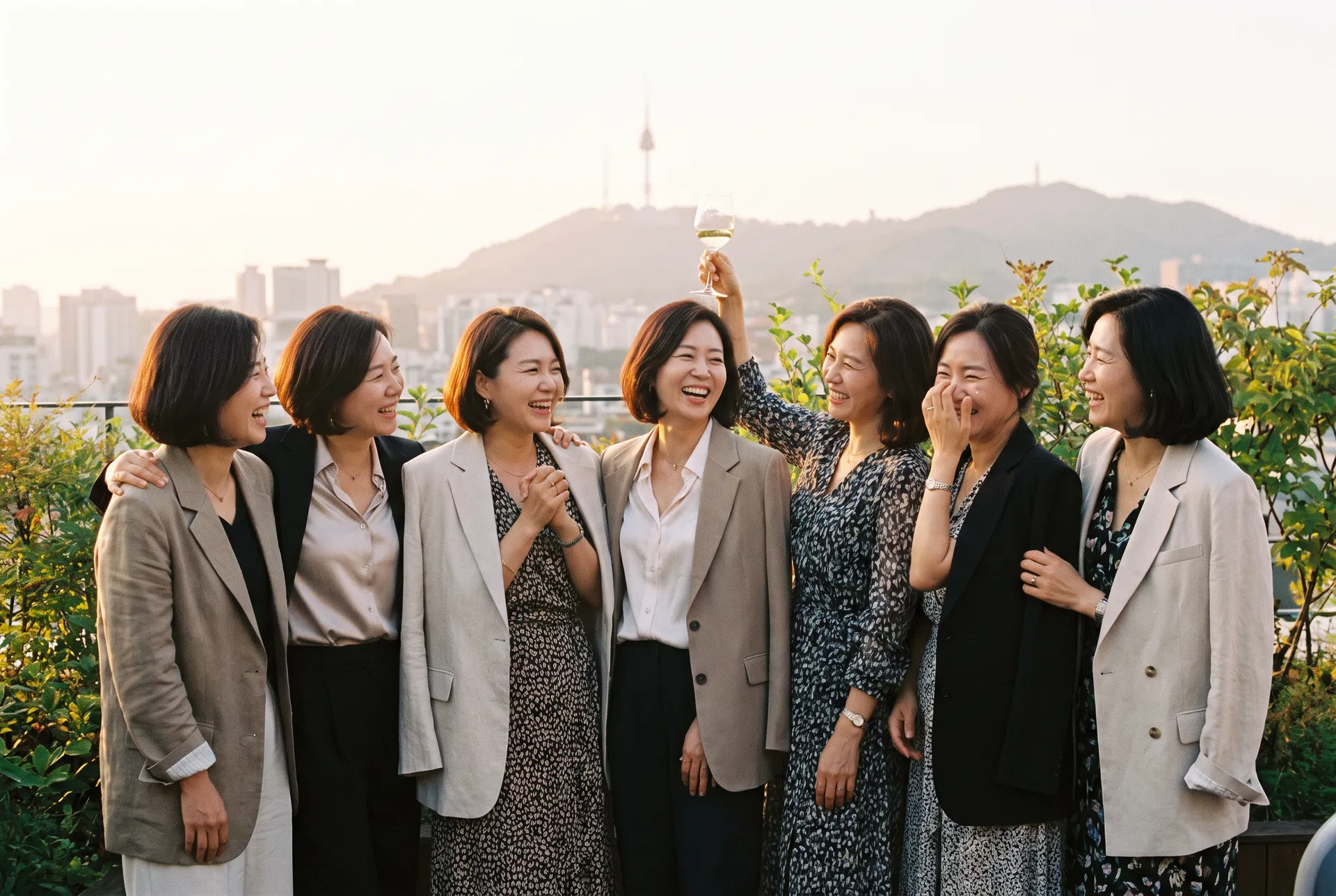
You come home with seven friends. That is the part that reliably outlasts everything, and no beach delivers it.
The mood fades. The evidence says so. The skin, the pictures and the women do not.
For HusbandsA note for husbands, since a few of you will have been sent this
There is research here too. A study in the Journal of Consumer Research found that experiences strengthen a relationship more than objects, even when the giver does not come along. The reason is not the unwrapping. It is what she feels while she is living it. In one study, recipients of material gifts showed a measurable decline in closeness. Recipients of experiences did not.
The necklace does not do it. The week does.
And most women will not book this for themselves. The flinch is real. Ask any woman who has hovered over something for herself and bought something for her kid instead. Which is exactly why it works as a gift. You are not only paying for it. You are giving her permission.
The WeekWhat I have built
A week in Seoul in April 2027, during cherry blossom season. Eight women. Everything planned, booked and scheduled, so the only thing anyone has to do is show up.
A full Korean spa day. A facial at a heritage beauty house. Scalp and hair analysis in Cheongdam. A morning in hanbok at the palace with a photographer following you. A Michelin-starred temple lunch. A real Korean bathhouse. Dinners you would never find on your own. And a professional photoshoot to finish.
Eight seats. The waitlist is open, and the waitlist gets first pick.
If you have read this far, some part of you already knows whether this is for you, or for her.
Join the Seoul Glow Week waitlist.
Eight seats. April 2027. The waitlist gets first pick.
Join the waitlistEight seats only \u00b7 Cherry blossom season, April 2027
Sources
- Korea Biomedical Review, on Ministry of Health and Welfare data: 1,170,467 foreign patients in 2024. koreabiomed.com
- The Korea Herald: dermatology, not plastic surgery, leads Korean medical tourism. koreaherald.com
- The Korea Times: record foreign visitor spending on K-beauty and wellness. koreatimes.co.kr
- Laukkanen et al., JAMA Internal Medicine: sauna bathing and cardiovascular and all-cause mortality, 2,315 men over 21 years. jamanetwork.com
- Moyer et al., Journal of Bodywork and Movement Therapies: does massage therapy reduce cortisol? A comprehensive quantitative review. sciencedirect.com
- de Bloom et al., European Psychologist: meta-analysis of vacation effects on wellbeing and its fade-out. hogrefe.com
- University of Miami International and Comparative Law Review: Korea\u2019s functional cosmetics category and its efficacy requirements. repository.law.miami.edu
- DermaVue clinical review: K-beauty science versus hype. dermavue.com
- BeautyMatter: Korea\u2019s record cosmetics exports, second globally behind France. beautymatter.com
- Journal of Ethnic Foods: Asian fermented plant foods as modulators of gut microbiota and host health. sciencedirect.com
- Chan & Mogilner, Journal of Consumer Research: experiential gifts foster stronger relationships than material gifts. academic.oup.com
- Variety: KPop Demon Hunters becomes Netflix\u2019s most-watched title ever. variety.com
- The Korea Times: 2026 Overseas Hallyu Survey, 27,400 respondents across 30 countries. koreatimes.co.kr
- Korea Biomedical Review: mugwort in traditional Korean medicine. koreabiomed.com
Join the Seoul Glow Week waitlist.
Eight seats. April 2027. The waitlist gets first pick.
Join the waitlistEight seats only \u00b7 Cherry blossom season, April 2027
Back to The Gatherwell Journal · See also: Seoul Glow Week · The Year of Traveling Together · Skip-Gen Travel